
The next generation of fractional laser resurfacing. Smoother texture, softened lines and visibly clearer skin, delivered with a level of comfort this category has never had before.

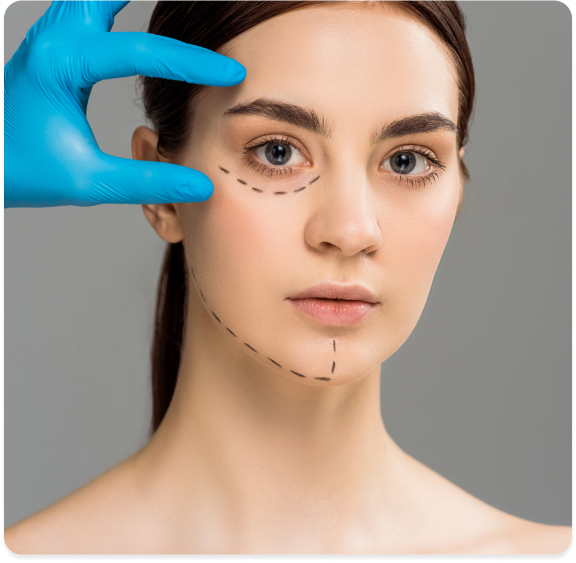
Mosaic 3D is a 1550nm fractional laser platform. It works by sending thousands of microscopic columns of energy through the surface of the skin and into the mid-dermis, the layer where collagen and elastin live. Those columns trigger a controlled repair response. Over the following weeks your skin builds new collagen and elastin around them, and the surface remodels itself: tighter, smoother, more even.
Energy is delivered into the mid-dermis, where collagen and elastin are made.
Non-ablative delivery keeps downtime to days, not weeks.
Chilled air and cold sapphire tips work in tandem with the laser.
Suitable across all Fitzpatrick skin types.
Fractional lasers are not new. This one is genuinely different, and here is precisely why.
Older fractional lasers place their microbeams in a fixed, repeating pattern at a single depth. Predictable, but it limits how much energy can be delivered before the surrounding tissue simply gets too hot.
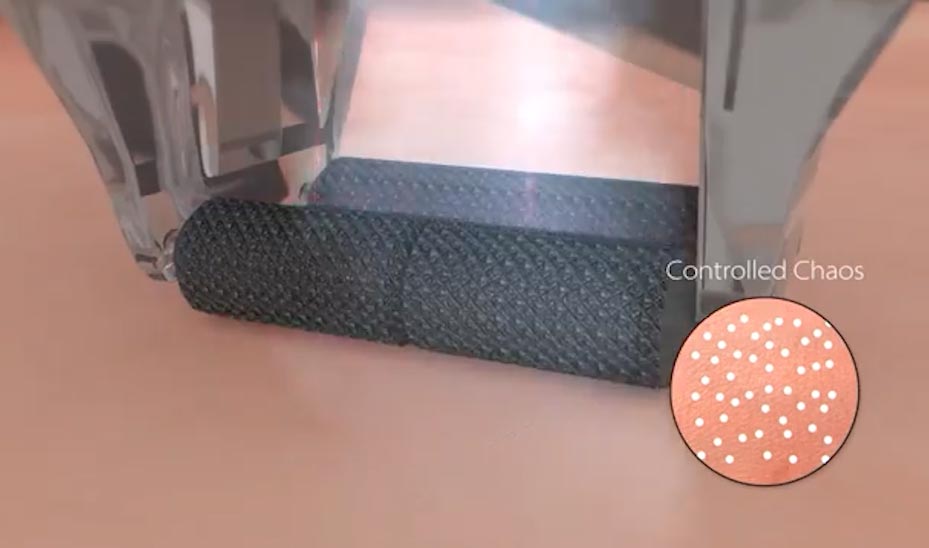
3D Controlled Chaos Technology scatters those microbeams deliberately, and varies their depth as well as their spacing. Because no two adjacent columns sit at the same depth, heat disperses rather than pooling. The practical result is that more of your skin can be treated properly in one session, reaching the depth needed for real remodelling, without the thermal load that would normally force a practitioner to hold back.
For acne scarring in particular, that depth is not a luxury. It is the whole treatment.
This is the part patients notice first.
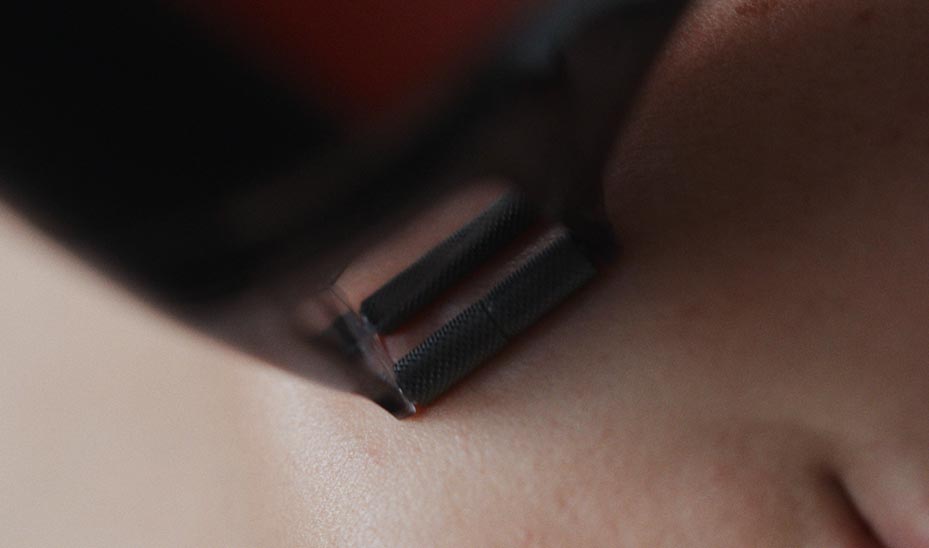
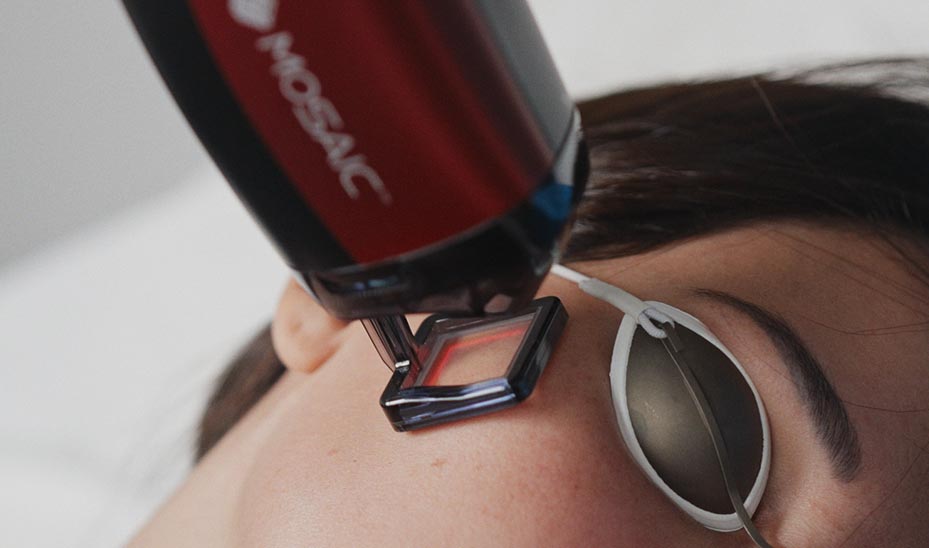
Chilled air runs continuously through the handpiece and out onto a sapphire tip, which sits against your skin and cools and gently compresses it at the same moment the laser fires. Cooling before, during and after each pulse does three things: it reduces how much you feel, it limits the redness and swelling afterwards, and it allows our practitioners to work confidently on the delicate areas that usually get avoided, including close to the eyes and around the mouth.
Those are precisely the areas where fine lines show first. Treating them properly matters.
Most devices do one or the other. Mosaic 3D does both, in a single session, with the same laser.
Rolling glides across broader areas, cheeks, forehead, neck, chest, giving fast, even, comfortable coverage for overall skin quality.
Stamping places precise, deeper 3D CCT shots exactly where they are needed: an ice-pick scar, a stubborn crease, a small patch of rough texture.
Your practitioner moves between the two within one appointment. That means your treatment is shaped around your face, not around what the machine happens to be able to do.
Face, neck, chest, hands and body. Six concerns, one platform.
Rolling, boxcar and ice-pick scars are irregular by nature, which is why treating them well needs both breadth and precision. Mosaic 3D covers the whole affected area, then targets individual scars with deeper stamped energy to rebuild collagen underneath and lift the skin from below. Most patients need a course rather than a single session, and improvement continues for months after the last one.
Crow’s feet, the fine lines above the lip, forehead creases and the softer lines that appear across the cheeks. Mosaic 3D targets the structural layer that thins with age rather than freezing muscle movement, so results build gradually and look like better skin rather than a treated face. It works well alongside anti-wrinkle injections, and it reaches the areas injectables cannot help.
If your skin looks fine in the mirror but never quite catches the light, texture is usually the reason. Fractional resurfacing is still the most reliable way to refine an uneven surface and soften the appearance of large pores, because it remodels the skin itself rather than sitting on top of it.
Skin revitalisation is a formal indication for this device, not a marketing phrase. New collagen and elastin in the mid-dermis change how light reflects off the surface. Patients tend to describe the result as looking rested, or as their skin “finally looking healthy” in photographs.
The neck and décolletage age faster than the face and are treated far less often, usually because most resurfacing devices are too aggressive for skin that thin. The cooling system and the controllable depth settings on Mosaic 3D make these areas realistic to treat.
Surgical scars, injury scars and older stretch marks respond to the same collagen remodelling process. These areas need a tailored plan, so we will always assess them in person first.
Many resurfacing lasers come with an unspoken caveat: they work beautifully on fair skin, and carry a real risk of pigmentation problems on deeper skin tones.
Mosaic 3D is designed for use across all Fitzpatrick skin types, from I to VI. Its controlled energy delivery, integrated cooling and adjustable depth settings allow our practitioners to select settings appropriate to your skin rather than applying a single protocol to everyone.
If you have Black, South Asian, East Asian, Middle Eastern or Mediterranean skin and you have previously been told that laser resurfacing is not for you, this is a conversation worth having again. We will assess your skin properly, discuss your history of pigmentation if you have one, and be honest with you about what we can and cannot achieve.
This is a real treatment doing real work. Here is what the week actually looks like.
Red, hot and slightly swollen, particularly around the eyes. Comparable to a strong day of sun. Most people are comfortable but would not choose to go out for dinner.
Redness fades to a flush. Mild swelling peaks on the morning after and then subsides. Skin feels tight and dry. Mineral makeup can usually be worn from around 24 hours, though we will confirm this with you.
Skin takes on a fine, sandpaper-like texture and may look slightly bronzed or speckled. This is the treated micro-columns working their way to the surface and it is a sign the treatment has done its job. Do not pick or exfoliate. Moisturise, wear SPF 50, and let it happen.
Texture clears. Skin looks brighter, and this is usually when people start noticing something.
The real work. Collagen and elastin continue to build, and texture, lines and scarring continue to improve well beyond the point where you stopped thinking about it.
An honest look at where it sits alongside the other treatments we offer.
Microneedling creates channels mechanically and works well for mild texture. Mosaic 3D delivers controlled thermal energy at a precise, chosen depth, which produces a stronger collagen response and better results for established scarring and lines. Downtime is longer.
Both reach the dermis. RF microneedling works through insulated needles and suits skin laxity particularly well. Mosaic 3D works optically, covering the full surface rather than discrete points, which makes it stronger on overall texture, tone and surface quality. They complement each other, and some patients do both across a year.
The same underlying 1550nm principle. Mosaic 3D adds varied-depth beam distribution and integrated cooling, which means a more comfortable session and more coverage per pass.
Peels work on the surface. Mosaic 3D works through it. Peels are excellent maintenance and a good entry point. They will not resolve scarring.
Different jobs entirely. Endolift works beneath the skin to tighten and lift contour. Mosaic 3D works within the skin to improve its quality. Lifting and resurfacing are not substitutes for one another, and patients who want both are common. If that is you, we will sequence them properly.
Not sure which is right for you? Book a consultation and we will tell you straight.
All treatments begin with a consultation, so we can confirm suitability and give you an accurate plan and price before you commit.
Treatment area
Single
Course of 3
Full face
£350
£890
Full face and neck
£450
£1145
Neck and décolletage
£350
£890
Consultation
FREE
Insert Nova’s existing verified review carousel here. Replace with Mosaic 3D-specific reviews as they come in.
Less than you would expect from a treatment working at this depth, and that is the point of the technology. A topical numbing cream is applied for 30 to 45 minutes beforehand, and the handpiece cools and gently compresses your skin at the moment each pulse is delivered. Most patients describe a warm prickling sensation with a build of heat towards the end of each area. Some areas, particularly the forehead and around the mouth, are more sensitive than others. Tell your practitioner if you need a pause. Nobody is being brave here.
Most patients with a desk job feel comfortable returning after two to three days, and many work from home the day after. Your skin will still be pink for the first 48 hours or so, and slightly textured on days three to five. Mineral makeup can usually be worn from around 24 hours after treatment. If you are client facing or on camera, plan for a long weekend.
Mosaic 3D is designed for use across all Fitzpatrick skin types. That said, safety in deeper skin tones depends heavily on correct settings and appropriate preparation. Our practitioners assess your skin type and pigmentation history at consultation, and where appropriate will recommend a period of skin preparation and a conservative first session. We will always be honest with you about risk.
Both are 1550nm non-ablative fractional lasers, so the underlying principle is the same. Mosaic 3D is a newer generation platform that varies the depth and distribution of its microbeams rather than using a uniform pattern, and has cooling built into the handpiece. In practice that means a more comfortable treatment and more effective coverage in each session.
Yes, and this is one of the areas where it performs particularly well. The cooling and compression system allows our practitioners to treat the delicate skin close to the eye, where crepiness and fine lines usually show first. Protective eye shields are used throughout.
Many patients notice brighter, smoother skin within one to two weeks of the first session. The more significant changes, particularly for scarring and lines, develop between four and twelve weeks as new collagen forms, and continue after your final session.
You are stimulating your own collagen, so the improvement is real and lasting, but your skin continues to age. Most patients maintain their result with a session once or twice a year. Sun protection is the single biggest factor in how long your result holds.
Yes, with sensible precautions. You must avoid sun exposure and sunbeds for a period before and after treatment and commit to daily SPF 50. If you have a beach holiday booked, we will schedule around it rather than compromise your result or your safety.
Mosaic 3D is not suitable if you are pregnant or breastfeeding, have an active skin infection or breakout in the treatment area, have taken oral isotretinoin (Roaccutane) within the last six months, have a history of keloid scarring, are currently tanned or have used self-tan recently, or have certain autoimmune or photosensitivity conditions. Some medications also matter. Your full medical history is discussed at consultation, which is why we assess everyone before treating.
Yes, though not on the same day. We generally recommend leaving around two weeks between anti-wrinkle injections or dermal filler and a laser session. Your practitioner will sequence your plan for you.
Nova Clinic is the first clinic in the United Kingdom to offer Mosaic 3D.
A gentle cleanser, a simple barrier-repairing moisturiser and SPF 50 every single day. No actives, no acids, no retinoids and no exfoliating for the period we specify. No hot yoga, saunas, steam or heavy exercise for 48 hours. Do not pick at the texture that appears around day three. You will be given full written aftercare and we are on the end of the phone if you need us.
If you have been waiting for a resurfacing treatment that takes your skin type, your comfort and your diary seriously, this is it. Book a consultation and we will assess your skin properly and tell you honestly what Mosaic 3D can do for you.
info@novaclinic.co.uk
3 College Approach, Greenwich, London SE10 9HY
Monday to Saturday, 10:00 to 20:00
Let us know if you have any questions.

Nova Aesthetic @ 2026